ServicesNon-Reflective Window Film
Non-Reflective Window Film in La Porte
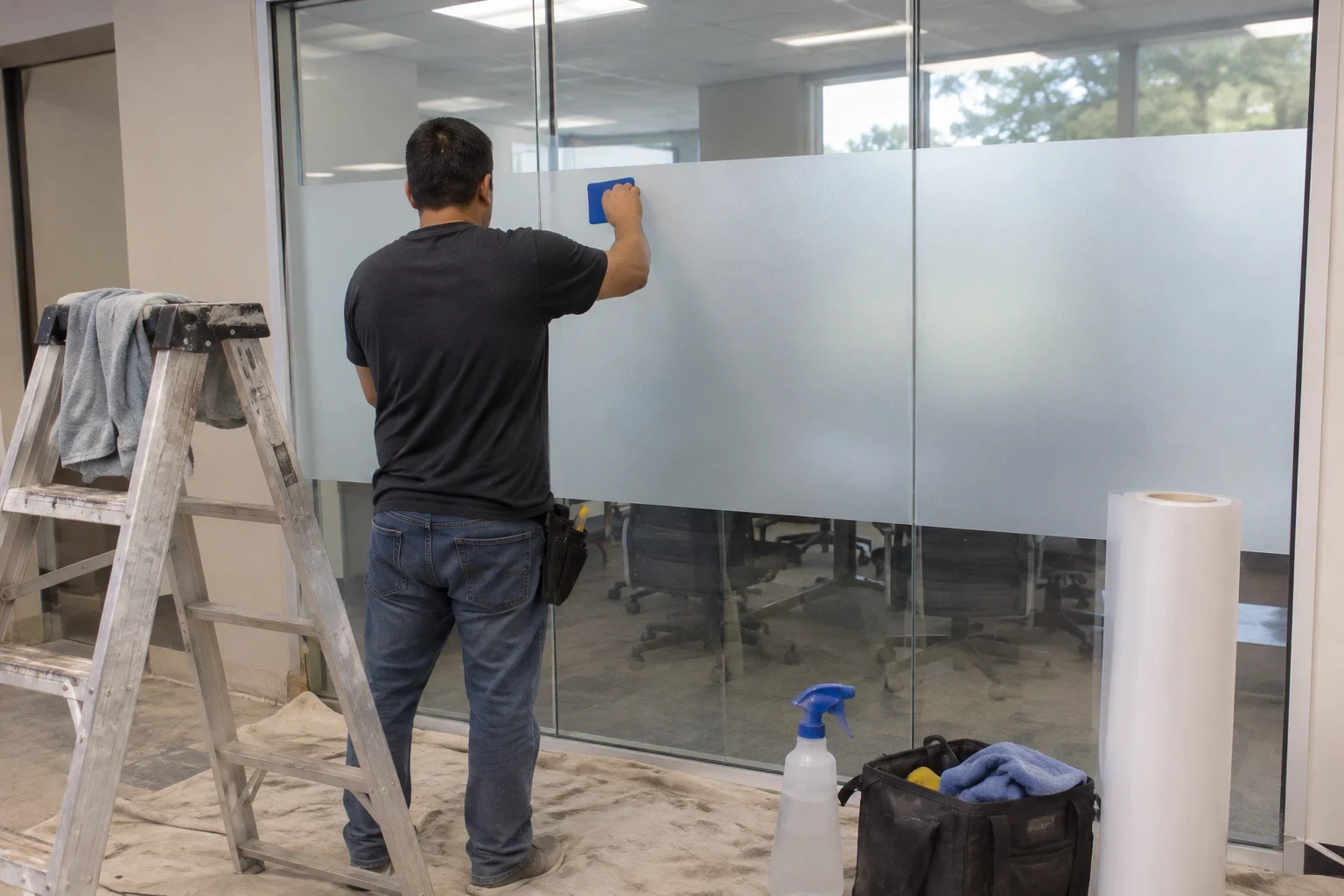
Cooler rooms and softer light shouldn't mean a silver sheen across your glass. Non-reflective window film handles heat, glare and UV protection while your windows keep their everyday look from the curb and from the couch. We help you choose a film and schedule the work well before the hot months.
Window Film That Works Without the Shine
Many heat-control films get their performance from a metallic layer that reflects sunlight. It works, but it also gives glass a silver or bronze sheen outside and turns windows into mirrors inside after dark. Non-reflective film relies on ceramic or carbon layers that absorb and block heat instead, so your windows look close to how they look today.
It's the right call when you care about appearance as much as heat rejection. That includes houses under HOA rules about window finishes, older homes where a shiny film would look out of place, and offices where staff want a clear view out. We have 8 years in business and 24,918+ home windows tinted, and the most common thing we hear is simple: people want the comfort without anyone noticing the film.
Planning ahead helps. If you call us in spring rather than during a hot spell, you have time to see samples, check HOA rules and spread the work across rooms if that suits your budget.
What Your Installation Includes
- 01
Checking your windows
Before recommending anything, we see whether each window is single or double pane, look for an existing low-E coating and note any fogged or failed seals. Not every film suits every type of glass, and we'd rather say so before you spend a dime.
- 02
Samples held to your glass
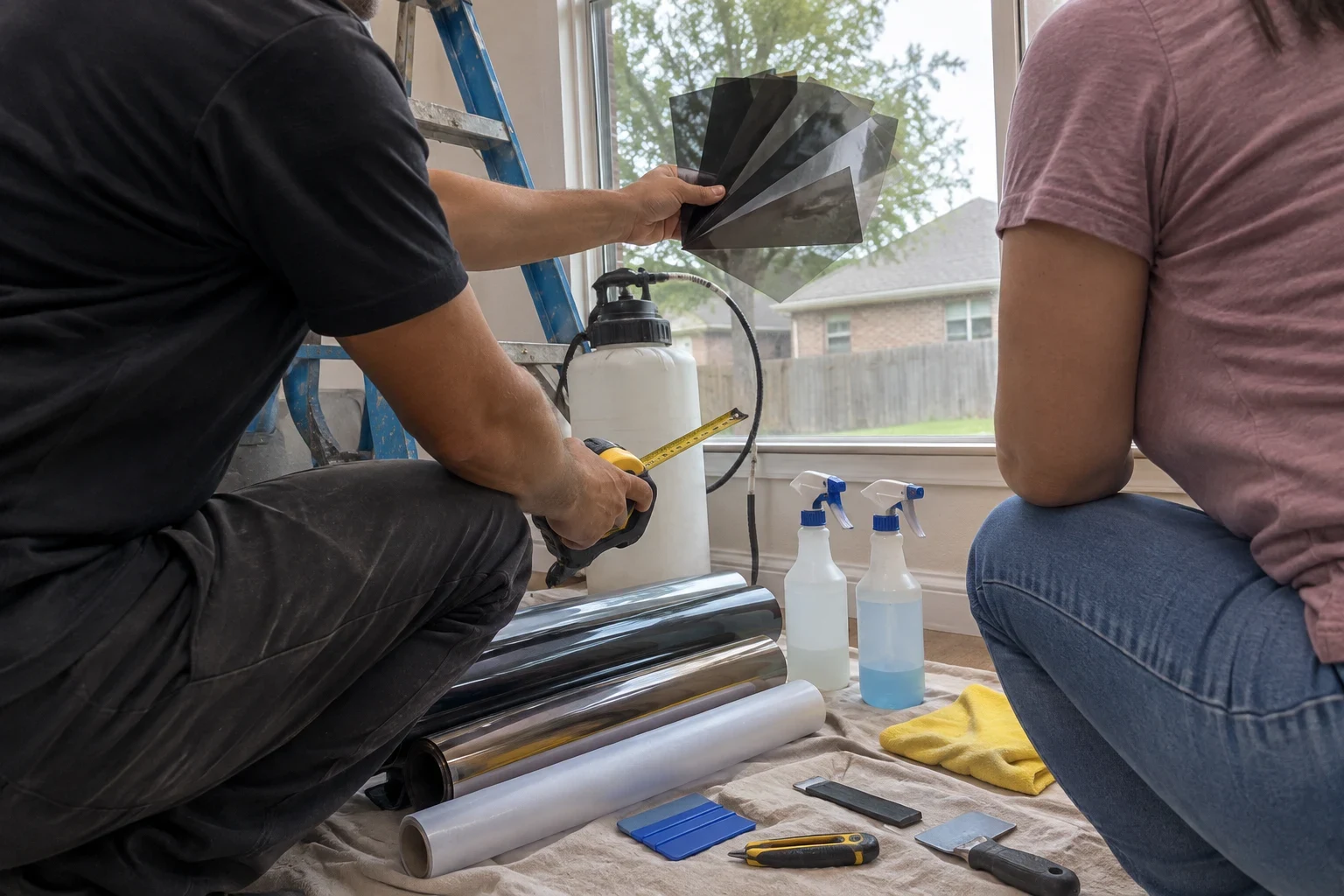
You see each option on your own windows in your own light. A film can look very different on a screen than it does from your kitchen table or your desk chair.
- 03
Protecting the room
Drop cloths go down, furniture near the glass gets moved, and every pane is scrubbed clean. A speck of dust trapped under film stays visible, so we don't rush this part.
- 04
Wet-applied, edge-trimmed film
Each sheet is floated onto the glass with a slip solution, pressed flat with a squeegee and trimmed to leave a slim, even margin at the frame. That margin gives the glass room to expand and shrink without lifting the film.
- 05
A tidy finish
We wipe the sills and frames and haul away our trimmings. You'll also hear how long to wait before washing the glass and which cleaners are safe to use.
Questions about Non-Reflective Window Film?
Call(281) 697-9155When Non-Reflective Film Makes Sense for You
A sunroom that's too hot by 3 p.m.
West- and south-facing glass lets in strong sun that builds heat well into the late afternoon. Non-reflective film cools that space down, and from the street your house looks just as it did before.
Neighborhood guidelines on glass
Many HOAs limit shiny or mirrored coatings on windows. A low-reflectance film typically meets those limits, though we suggest checking your association's rules before you pick a film.
Seeing yourself instead of the yard
Reflective film can turn your windows into dark mirrors once the lamps go on. With non-reflective film, your evening view outside stays much closer to normal.
A washed-out TV or computer screen
Midday light bouncing off a screen is one of the most common reasons people call us about living rooms and home offices. The film cuts that glare so you can leave the blinds open.
Color fading from floors and furniture
Daily sun slowly bleaches hardwood, upholstery and rugs. Quality film adds UV protection that greatly slows the fading.
From First Call to Finished Windows
- 1
We talk it through
On the phone, you describe the rooms that bother you and what you'd like to change. Then we pick a time for your free consultation.
- 2
Measuring and quoting
At your place we measure each pane, look over the glass and bring out samples. Your written quote lists every window, so you can do the whole house now or tackle the hottest rooms first.
- 3
The day we install
A typical house takes somewhere between a morning and a full day, based on how many windows are involved. We move one room at a time, so you can keep using the rest of your home.
- 4
Letting the film cure
Over the first few weeks, tiny water bubbles or a faint cloudiness can show up. That's just moisture working its way out, and it fades without any help. Wait roughly a month before washing the glass.
What Moves the Cost of Your Project
We price each job from the windows you actually have, never from a flat rate. Once you know what pushes the total up or down, it's easier to budget and decide between one visit and a few smaller phases.
- How much glass you're covering
- The total square footage drives both material and labor. Panes broken up by grids or muntins add time, since every small section gets its own cut and fit.
- Which film you choose
- Ceramic film tends to give the best heat rejection with the clearest view, and it sits at the higher end. Carbon film costs less and still looks natural. We'll lay both out side by side and tell you plainly what each one buys you.
- Reaching the windows
- Two-story living rooms, transoms and glass over a stairwell can call for ladders and more setup.
- Taking off old film
- Faded, bubbled or peeling film has to be stripped and the glue scraped away before anything new goes up. Stubborn residue can add real time to the job.
Non-Reflective Film: Common Questions
Will I give up heat control by skipping the mirrored look?
Not much, in most cases. Quality ceramic non-reflective films perform close to reflective ones, and the gap is often small in a typical room. Reflective film may test a bit higher, but you trade the natural look and your evening view. We'll compare a few options on your own glass so the choice is yours.
Is this film going to make my rooms darker?
Only as dark as you want. There are nearly invisible light shades and deeper ones that add stronger glare reduction. Holding samples up to your own windows is the easiest way to find the right level.
Can it go on dual-pane windows?
Generally yes, when the film suits the glass. Certain films soak up enough heat to put stress on some insulated units, so we look at your windows during the consultation and only recommend films that fit them.
What will my windows look like from inside after dark?
Much like plain glass. Without a metallic layer, you won't see the strong mirror reflection that reflective film creates once the lights come on. You can still look out into the yard in the evening.
Do you put this film in offices and storefronts as well?
Yes. Many offices pick non-reflective film to tame screen glare while keeping a clean, ordinary look from outside. You can read more on our Office Window Tinting and Commercial Window Tinting pages.
Plan Your Cooler Rooms Now
Give us a call and we'll set up a free consultation, bring samples and give you a clear quote. You can schedule the work for the time that suits you best.