ServicesPrivacy Window Tinting
Privacy Window Tinting in La Porte
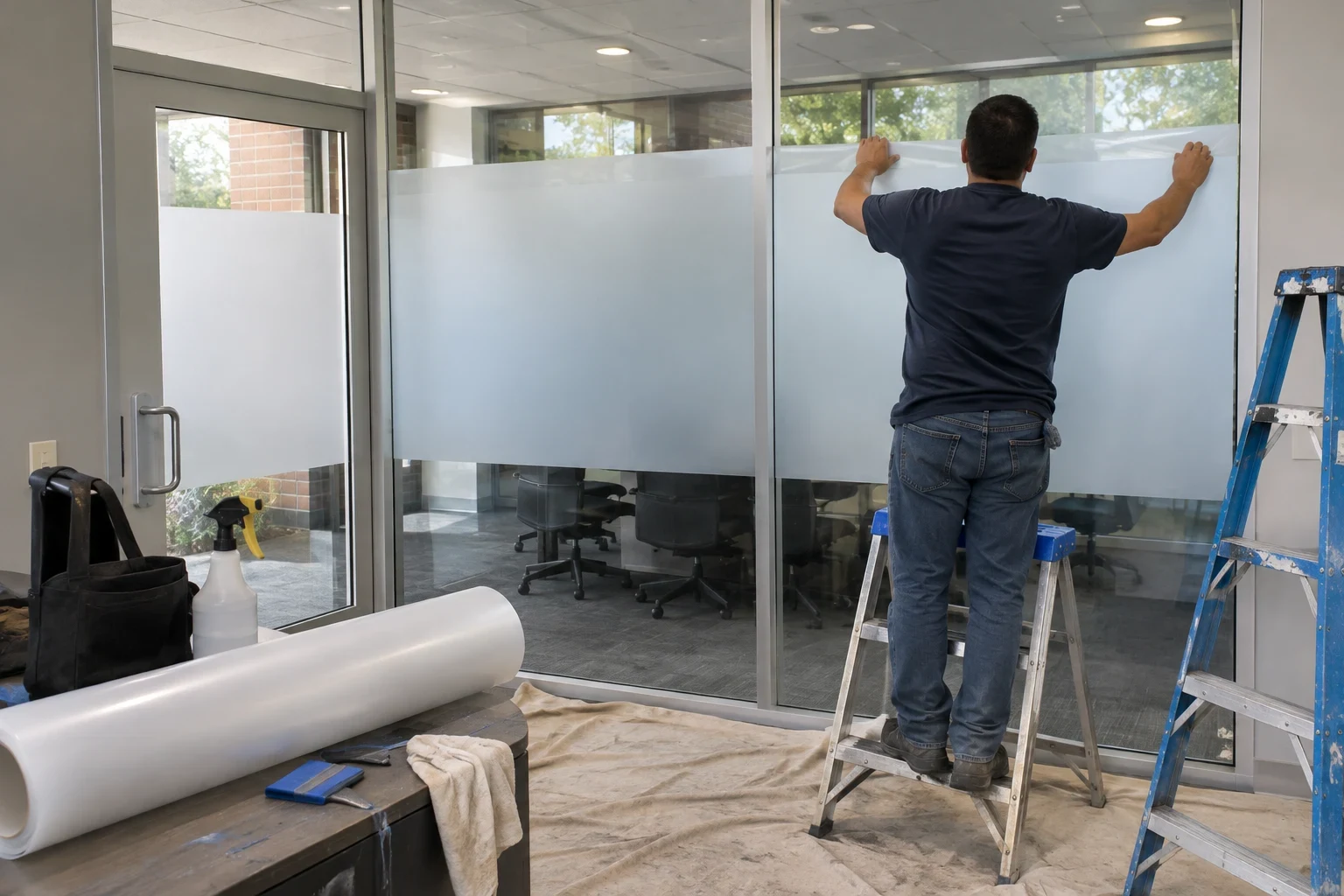
We install privacy window film that keeps people from seeing in while daylight still comes through. Before anything goes on the glass, we look at each room with you, explain how the view changes from day to night, and help you pick a film that fits how you use the space.
Privacy that still lets the light in
Curtains and blinds handle privacy by shutting out the day. Privacy window film works differently. Frosted and etched films blur the view in both directions at all hours. Reflective films look like a mirror from outside in daylight while your view out stays clear. Gradient films frost the lower part of a window and leave the top open for sky and light.
The right film depends on the room. A bathroom or a sidelight next to the front door usually needs frosted film, because reflective film loses its effect at night once your lights are on. A street-facing living room may do best with a reflective film during the day and blinds in the evening. We explain that difference before you commit, so nothing catches you off guard after dark.
It also helps to plan this before it feels pressing: before a two-story goes up next door, while you are settling into a new house, or before you start living with the blinds closed. In our 8 years in business and 24,918+ home windows tinted, we have seen that people who plan room by room end up with film they are glad to live with.
What our privacy tinting includes
- A room-by-room privacy check
- We stand where a passerby or a neighbor would and look back at each window to see what really shows. Then we sort your windows into two groups: those that only need privacy in daylight and those that need it day and night.
- Samples taped to your panes
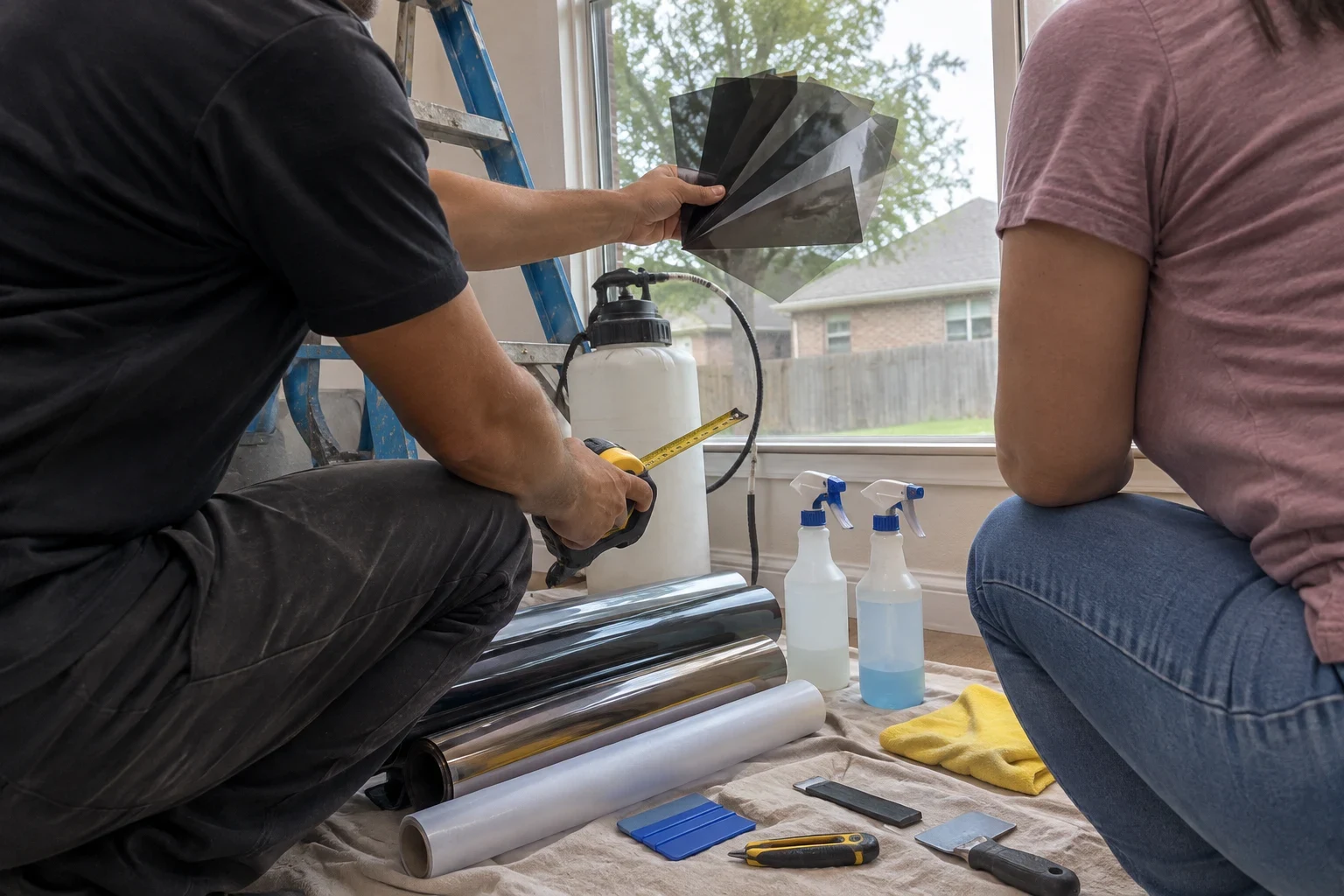
- A swatch in a catalog rarely matches what you see at home. We put frosted, reflective and gradient samples right on your own glass so you can judge the effect in your light, standing inside and then outside.
- A check on your glass type
- Dual-pane, low-E and older single-pane windows do not all handle film the same way. Some darker films absorb more heat, which can stress certain glass, so we match the film to the window before recommending it.
- Careful prep and installation
- We clean each pane, cut the film to fit close to the frame edge, and squeegee out the water and air. Blinds or shutters come down where needed and go back up when we finish.
- Extra benefits where they fit
- Many privacy films also add UV protection and some heat rejection. If keeping a room cool matters as much as privacy, we can talk through ceramic window film or reflective window film as well.
Signs privacy film is the right call
Your blinds stay shut all day
Closing the blinds every morning just to feel comfortable means trading away your daylight. The right film keeps the room bright and still screens the view.
A neighbor can see straight in
New construction, a tree coming down or a window that lines up with the house next door can change what people see overnight.
Bathroom or entry glass shows too much
Clear glass in a shower window, a door panel or a sidelight is a common worry. Frosted film handles these without replacing the window.
A street-facing bedroom or home office
Rooms where you sleep or work on camera deserve more privacy than a sheer curtain gives.
Glare is part of the problem
Strong afternoon sun along the Gulf Coast can make a bright room hard to use. Some privacy films cut glare too, so one job can fix both.
What affects the price of privacy film
We price privacy film after we have measured your actual windows, so the number reflects your home and not a guess. You get it in writing before anything is scheduled. These are the things that move it most.
Number and size of windows
Film is priced by the area covered and the time each pane takes. A few bathroom windows cost far less than a wall of living room glass.
Type of film
Frosted, reflective, dual-reflective and gradient films are made differently and cost differently. Decorative patterns usually take more cutting time.
Window shape and access
Arched tops, transoms and high or second-story windows need more careful cutting and sometimes ladders or scaffolding.
Condition of the glass
Old, peeling film has to be removed first, and paint spots or heavy hard-water marks need extra prep.
Doing rooms together
Tinting several rooms in one visit is usually more efficient than coming back for each room separately, which is one reason it pays to plan ahead.
How a privacy film job goes
- 1
A conversation by phone
Start by walking us through the spots that feel exposed, like a shower window or a front room facing the street, and the times of day they bother you most. A few quick questions about your glass help us plan, and then we pick a visit time that works for you.
- 2
Visit, samples and a written estimate
We measure, show samples on your glass and explain how each option looks by day and by night. You get a written estimate broken down by window, and you decide on your own schedule.
- 3
Installation day
We lay drop cloths, move furniture away from the windows with your okay, and clean each pane before applying film. Smaller jobs often finish in one visit, and we tell you the expected time when we schedule.
- 4
Curing and a walkthrough
New film can look slightly cloudy, or hold a few tiny droplets underneath, while the leftover moisture dries out. That takes anywhere from several days to a few weeks depending on the weather. We walk through every window with you and explain how long to wait before cleaning the glass.
Privacy window film questions
Can people see in at night with reflective film?
Yes, they can. Reflective film works by brightness, so whichever side is brighter gets the mirror effect. At night with your lights on, the view reverses and people outside can see in. For rooms you use after dark, we suggest frosted film or reflective film paired with blinds.
Will frosted film make my bathroom dark?
No. Frosted film diffuses light instead of blocking it, so the room stays bright while shapes and detail are blurred. Many people find the light softer and more even than before.
Can I still see out through privacy film?
That depends on the film you choose. Reflective film keeps your daytime view to the outside sharp. Frosted film softens what can be seen from either side, and gradient film leaves the upper part of the window clear so sky and treetops stay in view.
Is privacy film safe on dual-pane windows?
Most privacy films are fine on dual-pane glass, but not every film suits every window. We check the glass type during the visit and only recommend film that is a good match for it.
Can the film be removed later?
Yes. Window film is made to come off, and when it is removed properly it does not harm the glass. That makes it a good option for people who may change a room's use or sell down the road.
Does my HOA have a say in reflective film?
Some homeowner associations have rules about how windows look from the street, and mirror-like film is the one most often questioned. It is worth checking your rules before you decide. If your board wants details, we will tell you plainly what each sample looks like from the curb, by day and after dark, so you have something clear to hand them.
Plan the rooms you want covered
Start with a short phone conversation about the rooms that feel too exposed. We go over the options that fit them, then come by to put samples on your glass. The consultation is free, and you can take as long as you like to decide.