ServicesTurf Protection Window Film
Turf Protection Window Film in La Porte
Melted streaks in artificial grass usually trace back to a window bouncing concentrated sunlight across the yard. We pin down which pane is responsible and apply film that softens and scatters that reflection, so the turf you put down stays in good shape.
Why windows melt artificial grass
Most newer windows use low-E glass, which reflects a lot of heat outward. Double-pane units can also flex slightly inward as temperature and air pressure change. That curve turns the glass into a shallow mirror that concentrates sunlight into a narrow band. When that band lands on synthetic turf, the fibers soften, flatten and melt.
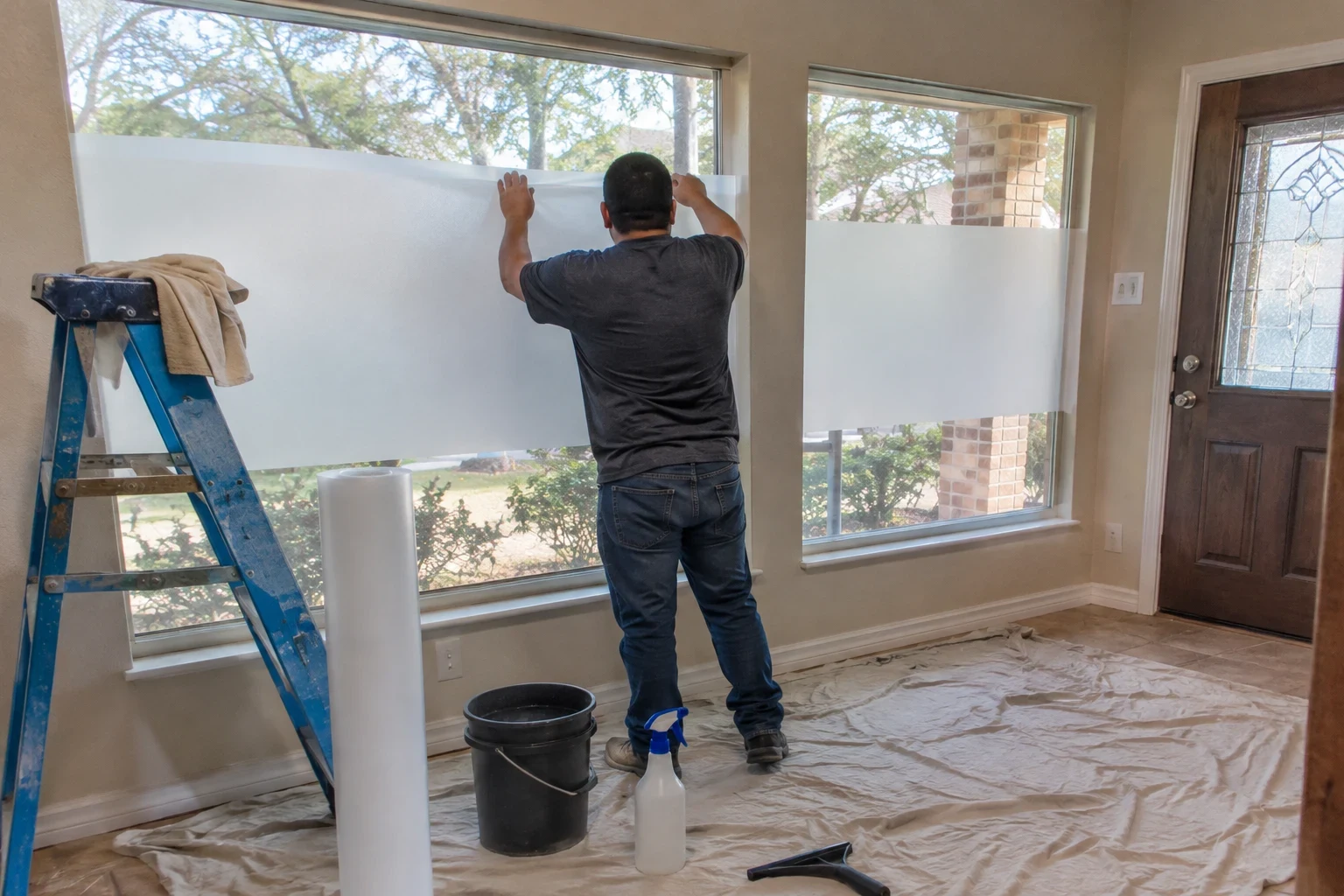
Turf protection window film reduces how much light the glass throws back and spreads out what it does reflect. The hot spot goes away, and the window still looks like a window. It is a small job compared with replacing a section of turf every season.
We have been doing this work for 8 years. The best time to call is before you pay for new turf, so the patch you install is not the next thing to melt.
Your turf film job, step by step
- Finding the window at fault
- We compare the shape and location of the melt marks with where the sun travels and which glass faces your yard. The source is often your own window, sometimes a neighbor's, and now and then two panes working together.
- Picking a film that fits
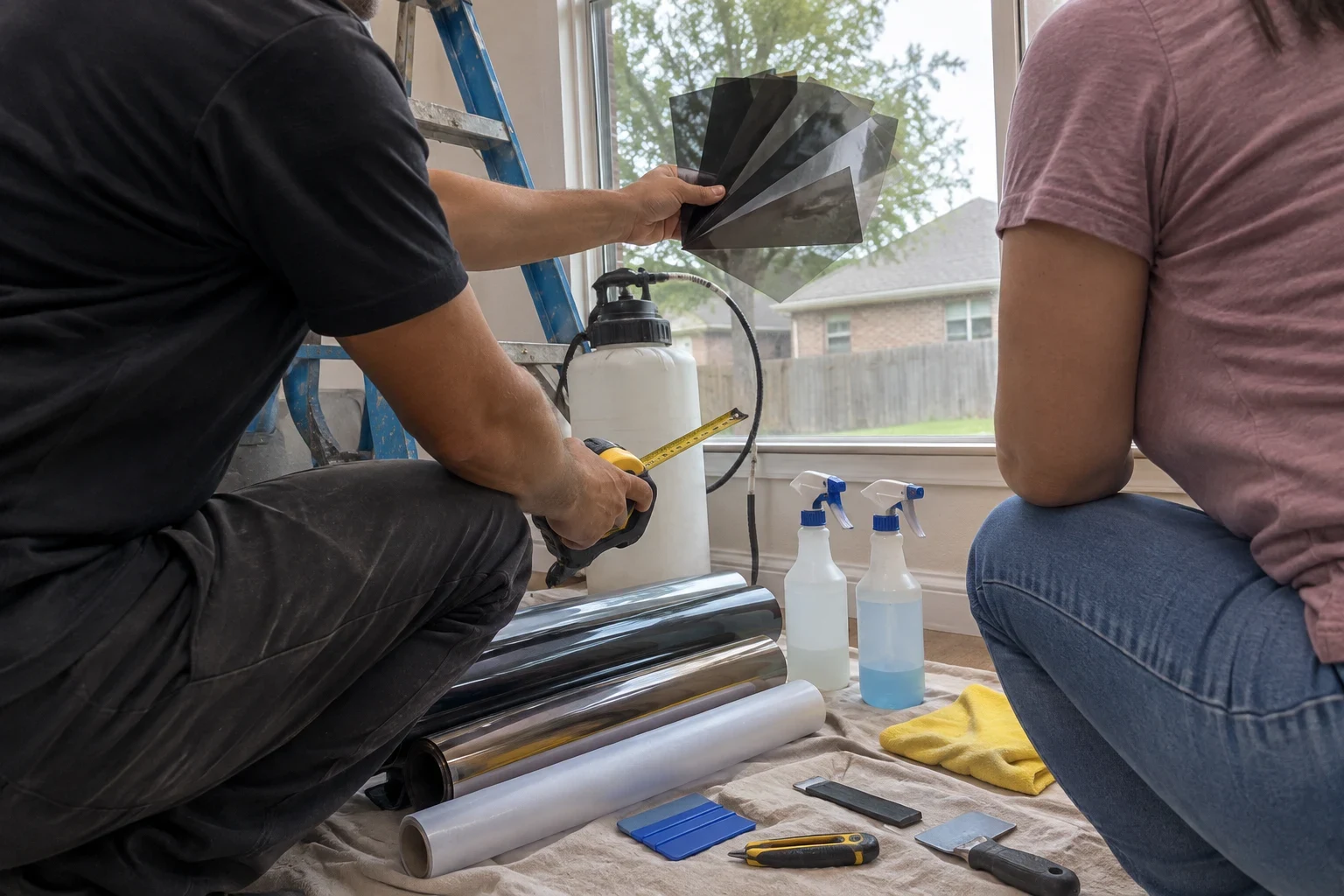
- Turf protection films are made to lower how much light bounces off the outside of the glass, not simply to darken it. We walk you through the choices and show how each looks from the room and from the yard before we apply anything.
- Careful prep and install
- We scrub the glass free of grit and residue, trim the film to the exact pane and press it flat with a squeegee so moisture has no edge to creep under.
- Straight talk about the glass
- A failed seal or a pane that is bowed far out of shape is something you should hear about first. Film stops the reflection, but it will not repair a damaged window, and we say so before you spend anything.
- Tidy finish and care tips
- We bag every trimmed scrap and take it with us. You also get simple guidance on when the film can be washed for the first time and which mild cleaners keep it clear.
Signs your turf needs this
Curved or crescent-shaped melt marks
Straight lines can come from many things. A clean arc that looks drawn on is the usual signature of a focused reflection.
Damage that moves with the seasons
As the sun sits lower in fall and winter, the hot band shifts across the yard. A new mark a few feet from last year's is a strong clue.
Fibers that feel stiff or glassy
Melted blades fuse together and feel crunchy underfoot. They do not stand back up after brushing.
Warped vinyl or faded patio furniture
The same reflection can soften vinyl siding, fences and plastic chairs. If those show damage too, the turf is likely next.
New turf on the way
If you are about to install or replace artificial grass near low-E windows, film first is the cheaper order of operations.
What moves the price
Turf protection film is usually priced per window, and most yards only need a handful treated. Your quote depends on what we find on the visit, and you will see it line by line before any work starts.
Number and size of panes
Larger glass and more panes mean more film and more labor. Often only the upper sash or a single picture window is the culprit.
Access to the glass
Second-story windows or panes behind landscaping take more setup and time to reach safely.
Film type
Different turf protection films vary in cost and appearance. We will show you the tradeoff between look and performance.
Whose window it is
If the reflecting window belongs to a neighbor, both households need to agree before we film it. We can talk through that with you on the call.
How a turf film job goes
- 1
Phone consultation
You tell us where the damage is, when you notice it and roughly which windows face that spot. Photos of the marks help when we visit.
- 2
Site visit and quote
We look at the yard and the glass, confirm which panes are causing the problem, and give you a written quote broken down by window.
- 3
Install day
Most residential turf jobs cover just a few panes and take part of a day. We protect the area around the window and work clean.
- 4
Check the result
We walk through how the film should look as it cures. Any light haze clears as the moisture works out over the following days.
Turf film questions
Will I notice the film when I look out the window?
From indoors, turf protection film is meant to stay low-key, and most people stop noticing it after a few days. From the yard, some films give the glass a soft matte or lightly frosted look. We bring samples to the visit so you can hold them up to your own glass and decide before anything is installed.
Can I just tint the window instead?
A standard tint is not built for this. Some reflective films can even make the problem worse. Turf protection film specifically lowers and scatters exterior reflection, which is what stops the melting.
Will the film fix the turf that is already melted?
No. Damaged turf needs to be patched or replaced by your turf installer. The film keeps the new section from melting the same way.
Do you do other window film work too?
Yes. We have 24,918+ home windows tinted, and many customers pair this with home window tinting or ceramic window film on sun-facing rooms. We can quote both on the same visit.
How soon should I call after I see damage?
Sooner is better, especially before the lower winter sun starts hitting a new spot. Planning the film before your turf is replaced saves you from paying for the repair twice.
Fix the reflection before you fix the turf
Tell us where the marks are and we will help you sort out which window is to blame. The consultation is free, and you get a clear quote before anything is scheduled.