ServicesReflective Window Film
Reflective Window Film in La Porte
Reflective window film bounces a large share of the sun's heat off the glass before it gets inside. Rooms stay cooler and glare drops, and you get daytime privacy. We help you plan it for the windows that need it most.
When Reflective Film Is the Right Choice
Reflective film has a thin metal layer that works like a one-way mirror in daylight. It turns back sunlight instead of only absorbing it, so it is one of the strongest options for heat rejection on glass that takes direct afternoon sun. From outside, the window looks silver or bronze.
It suits west-facing living rooms, sunrooms, upstairs bedrooms that bake by late afternoon, and storefronts where staff squint at screens. It is not for everyone. Some people dislike the mirror look, and some HOAs limit it. If that sounds like you, ceramic window film or non-reflective window film may fit better. We will tell you honestly which one makes sense.
Over 8 years in business, we have learned that the best results come from planning before the worst heat arrives. Booking in spring gives you a cooler house by the time a Texas summer peaks, and the film has dry weather to cure.
What Your Reflective Film Job Includes
- A room-by-room assessment
- We note which direction each window faces, what kind of glass it is and how you use the room. Film goes where the sun actually hits hard, rather than across every pane out of habit.
- A check on your glass
- Because reflective film both bounces back and soaks up solar heat, some dual-pane units and large tempered panes can be put under thermal stress. We confirm the glass type and size before suggesting a shade, which helps you avoid a cracked or fogged unit later.
- Swatches on your own windows
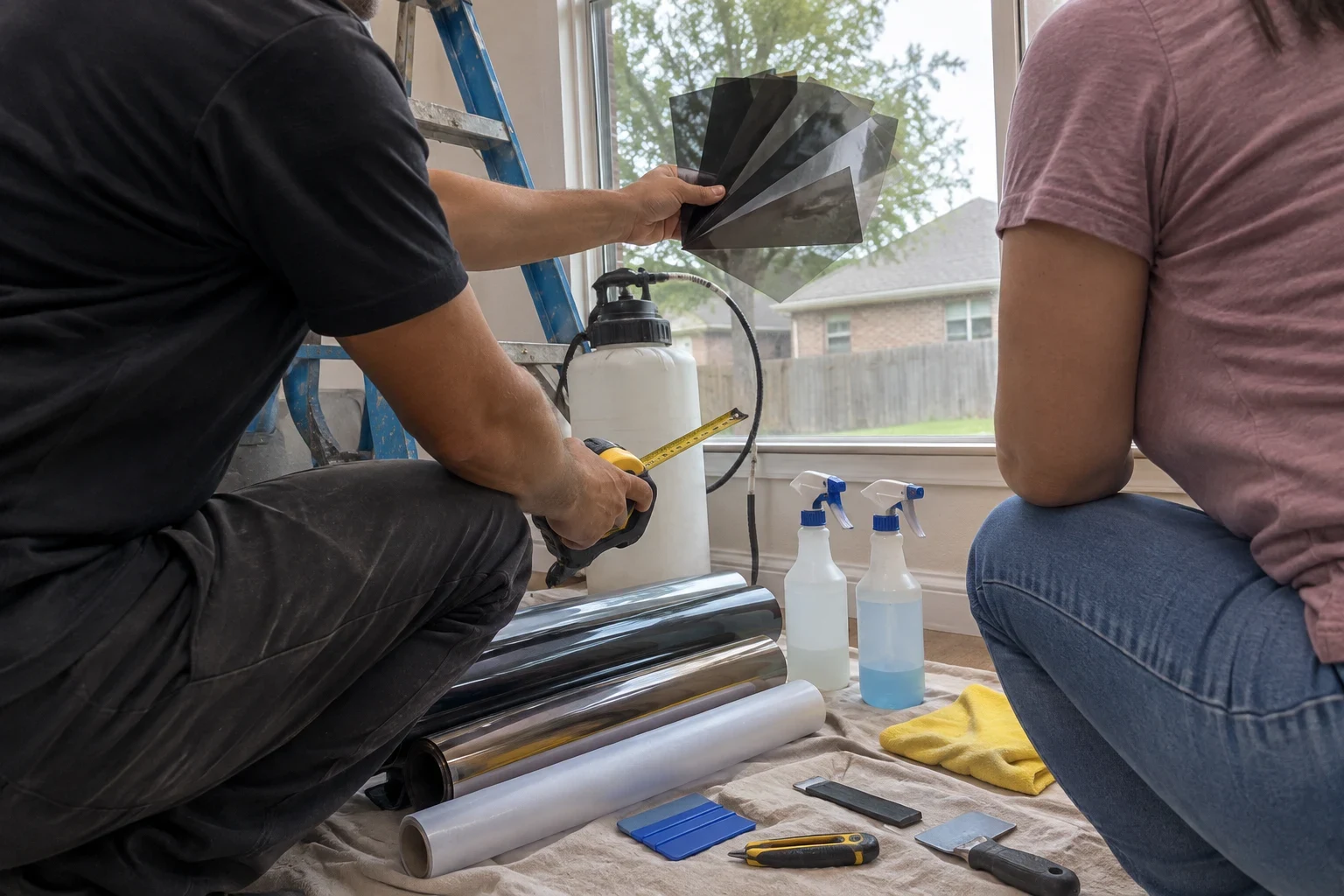
- You see film samples held up to your actual glass, both from the yard and from inside the room. Silver, bronze and lighter tones look quite different in person than in a brochure.
- A protected work area
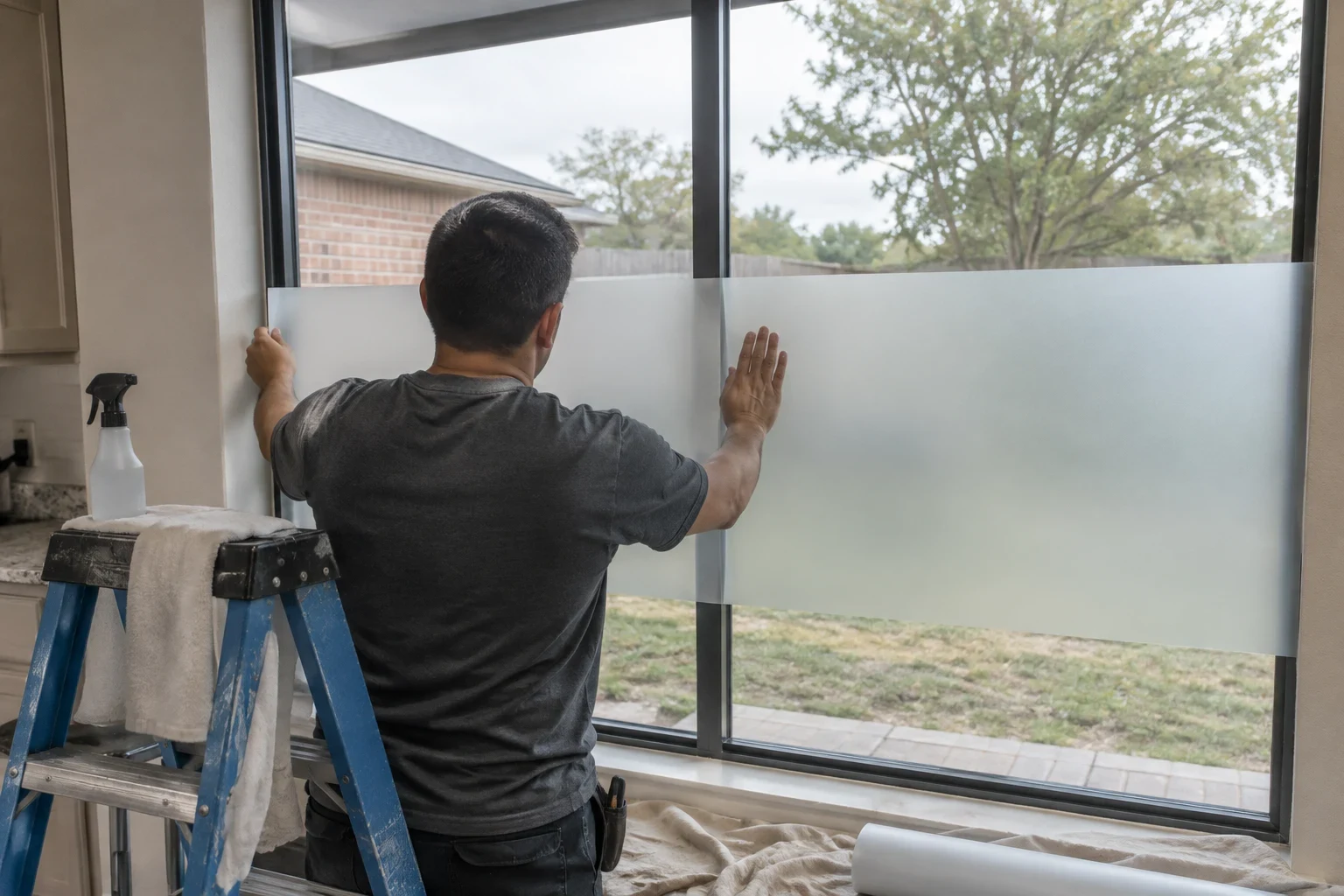
- We slide furniture away from the glass and lay drop cloths over floors and sills. Each pane is scrubbed clean, the film is trimmed tight to the edges, and the water beneath it is pressed out with a firm card.
- A tidy finish
- Before we leave, the frames get wiped down and every offcut goes out with us. We also leave simple care notes, like skipping ammonia cleaners and scratchy pads.
Signs Your Windows Need Reflective Film
The same room overheats every day
When one bedroom or den is noticeably warmer than the rest of the house by mid-afternoon, sunlight pouring through the glass is the usual cause. That is exactly the kind of heat reflective film turns away.
The AC can't keep up after lunch
If the thermostat setting is never reached once the afternoon sun swings around, your windows may be letting heat in faster than the system can pull it out. Lowering solar gain lightens that load and can add up to real energy savings.
Screens are hard to read
TVs, computer monitors and checkout screens look washed out in bright light. On strong sun exposures, reflective film delivers serious glare reduction.
Rugs and wood are fading
Bleached cushions, faded rugs and lighter patches on wood floors are signs of UV damage. Most reflective films screen out nearly all UV rays.
You feel on display in daylight
If passersby or neighbors can look right into your rooms, the mirrored finish helps. During the day it is hard to see in, while your view out stays clear.
How Installation Day Goes
- 1
Start with a phone call
Let us know which rooms trouble you and at what time of day. We talk about whether reflective film suits what you want, then pick a time to look at the windows in person.
- 2
Visit, measure and compare
At your place we measure every pane, confirm the glass type and hold up film swatches so you can compare. Afterward you receive a written quote broken out by window and by film.
- 3
Putting the film up
A typical house takes anywhere from a few hours to a full day. We move through one room at a time from the inside, so the rest of your home stays usable.
- 4
Letting it cure
For a few days, sometimes a few weeks, you might notice light haze or small pockets of water while the moisture dries out. This is expected, and muggy stretches can make it take a little longer. Hold off on touching or washing the film for about 30 days.
What Shapes the Price of Reflective Film
Your price mostly depends on how much glass we cover and how much work it takes to fit the film well. We measure every pane first and give you a written, line-by-line quote, so the full number is clear before any film goes on. Many people start with the hottest rooms this year and finish the rest later, which keeps the budget easy to plan.
- How much glass you have
- More windows and larger panes use more film and take more time. Windows divided into lots of small panes also take longer per square foot, since each section is cut and fitted on its own.
- The film you choose
- Choices range from a standard metallized film to dual-reflective films that show less mirror effect from inside at night. The grade and shade you pick are a big part of the final figure.
- High or hard-to-reach windows
- Second-story glass, tall entry windows and transoms above doors may need ladders or scaffolding. That extra setup time shows up on the quote.
- Removing worn-out tint
- If your windows already have film that is bubbling, peeling or faded to purple, we strip it off and clean the leftover adhesive from the glass. That prep step adds labor, and we list it separately so you can see it.
Reflective Window Film Questions
Something not covered here? (281) 697-9155
Will people be able to see inside at night?
Yes. Once it is dark and your lights are on, the mirror effect flips, so people outside can see in while you mostly see your own reflection. If nighttime privacy matters, keep blinds or curtains in the plan, or ask us about privacy window tinting.
Is reflective film safe on dual-pane windows?
Usually, yes, as long as the film suits the glass. The wrong match can hold too much heat in the pane and strain the seal or the glass. We check the glass type and size first, and sometimes we suggest a lighter reflective shade or a different film.
Will my rooms feel dark afterward?
It depends on the shade. Darker reflective films block more daylight along with the heat, while lighter ones keep rooms bright and still turn back a good share of solar heat. Seeing samples on your own windows makes the choice much easier.
Can the film interfere with my phone signal?
The metal layer can weaken reception slightly in some rooms, mostly when a lot of glass is covered. Most people never notice. If your signal is already spotty at home, tell us and we will plan around it.
Have you installed reflective film on windows like mine?
Very likely. Our crew has 24,918+ home windows tinted, and reflective film on hot west and south glass is work we do often. When you call, we are happy to talk through similar rooms and what worked there.
Plan Your Cooler Rooms Before Summer Peaks
Tell us which rooms get too hot or too bright and we will help you decide if reflective film is the right fit. We serve La Porte, Deer Park, Seabrook, League City and nearby towns.