ServicesSecurity Window Film
Security Window Film in La Porte
Security film is a tough, clear sheet applied to the inside face of your glass. When a pane gets hit, the broken pieces cling to the film rather than falling into the room. That makes a break-in slower and noisier, and keeps shards off your floor.
What security film does, and what it doesn't
Ordinary window glass breaks into sharp pieces and clears out of the frame in seconds. Security film is a heavier polyester film, much thicker than the solar films we use for heat rejection, applied to the inside face of the glass with a strong adhesive. Once it cures, a blow that would have opened the window leaves a cracked pane still held together. Anyone trying to get in has to keep hitting it, which takes time and makes noise.
We're honest about the limits. Film does not make glass unbreakable. Think of it as an added layer, not a replacement for shutters or impact-rated glass. Its real strengths are buying time, keeping broken glass contained and adding UV protection, at far less cost and disruption than new windows.
The best time to add it is before something happens, not the week after, when everyone calls at once. In 8 years in business, we've found that the people happiest with their film are the ones who planned it calmly and picked the windows that mattered most first.
What's part of a security film job
- A look at every opening
- We check the glass type, the frame and whether each pane is single or dual. Dual-pane units handle heat differently, so we match the film to the glass and avoid stressing the seal.
- Thickness matched to the risk
- Thinner security films suit upstairs windows and interior glass. Heavier films make sense for ground-floor doors, sidelights and storefront glass that faces a parking lot.
- Careful edge prep and application
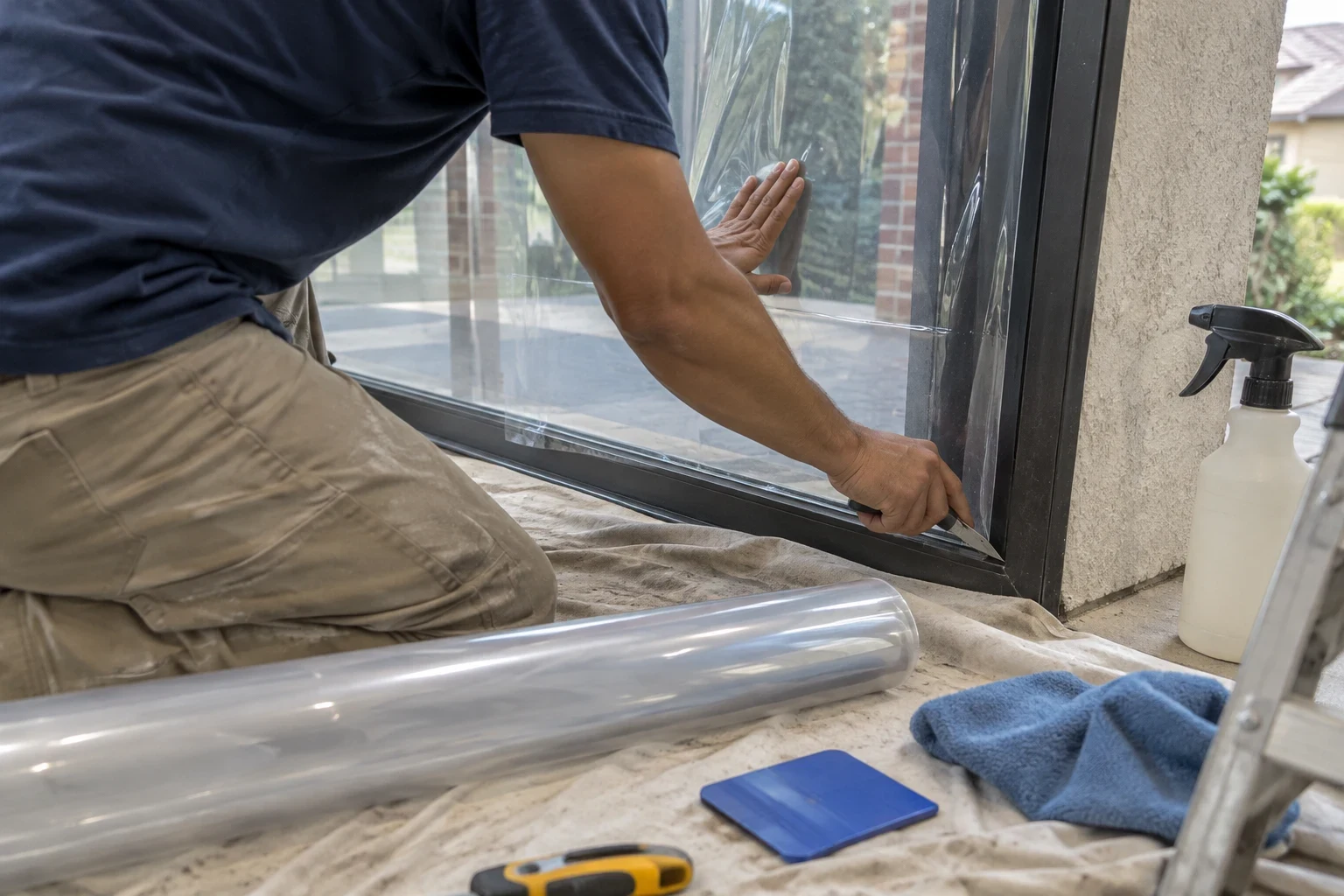
- Every pane gets cleaned with a blade so no grit ends up under the film. We float the sheet into place on a slip solution, press the liquid out from the center toward the edges and cut it close along the frame. Film that reaches nearly edge to edge holds a cracked pane far better.
- Frame anchoring where it helps
- For doors and large low panes, we can talk through fastening the film edge to the frame. That keeps a cracked sheet in the opening instead of letting it push in as one piece.
- UV protection built in
- Most clear security films screen out the bulk of UV light, so wood floors, area rugs and upholstery hold their color longer. Tinted versions add some glare reduction and privacy as well.
- Protection and cleanup
- Drop cloths go down on sills and floors before we start. We move what needs moving, wipe up the water and leave the glass clean.
Signs it's time to plan for security film
Glass within reach of a lock
Sidelights and glass door panels near a deadbolt are a common way in. Break the glass, reach through, turn the lock. Film makes that much harder.
Windows nobody can see
Ground-floor windows behind fences, shrubs or side yards give someone cover to work. Those are usually the first panes we suggest filming.
Street-facing glass at your business
Storefronts and office lobbies are targets for quick smash-and-grab theft. Film keeps the glass in place long enough that most people give up and move on.
Big panes and little kids
Sliding doors and tall low windows take a lot of bumps. If one breaks, film keeps it from showering shards across the floor.
Storm season on your mind
Along the Gulf, wind-blown debris breaks plenty of windows. Film helps hold that glass together, so it's a sensible layer alongside shutters, not a swap for them.
What moves the price of security film
Every quote is built from your windows, not a flat rate. We'll go through it line by line so you know exactly what you're paying for. Planning ahead also lets you split the work into phases if that suits your budget better.
Film thickness
Heavier security films cost more and take more care to install. We only suggest the thick stuff where the risk calls for it.
Number and size of panes
A few sidelights is a small job. A wall of sliding doors or a full storefront takes more film and more hours.
Frame anchoring
Fastening the film to the frame adds materials and labor, so we recommend it only on doors and large ground-level glass.
Access and old film
High windows need ladders, and peeling old tint has to be stripped before new film goes on. Both add time.
Clear or tinted
Tinted security films that also cut heat and glare can cost a bit more than plain clear film.
How a security film install goes
- 1
A free consultation by phone
Tell us which doors and windows worry you and why. We'll set a time to come out, measure and look at the glass. Afterward you get a written quote that lists each opening on its own line, so nothing is lumped together.
- 2
Seeing samples on your glass
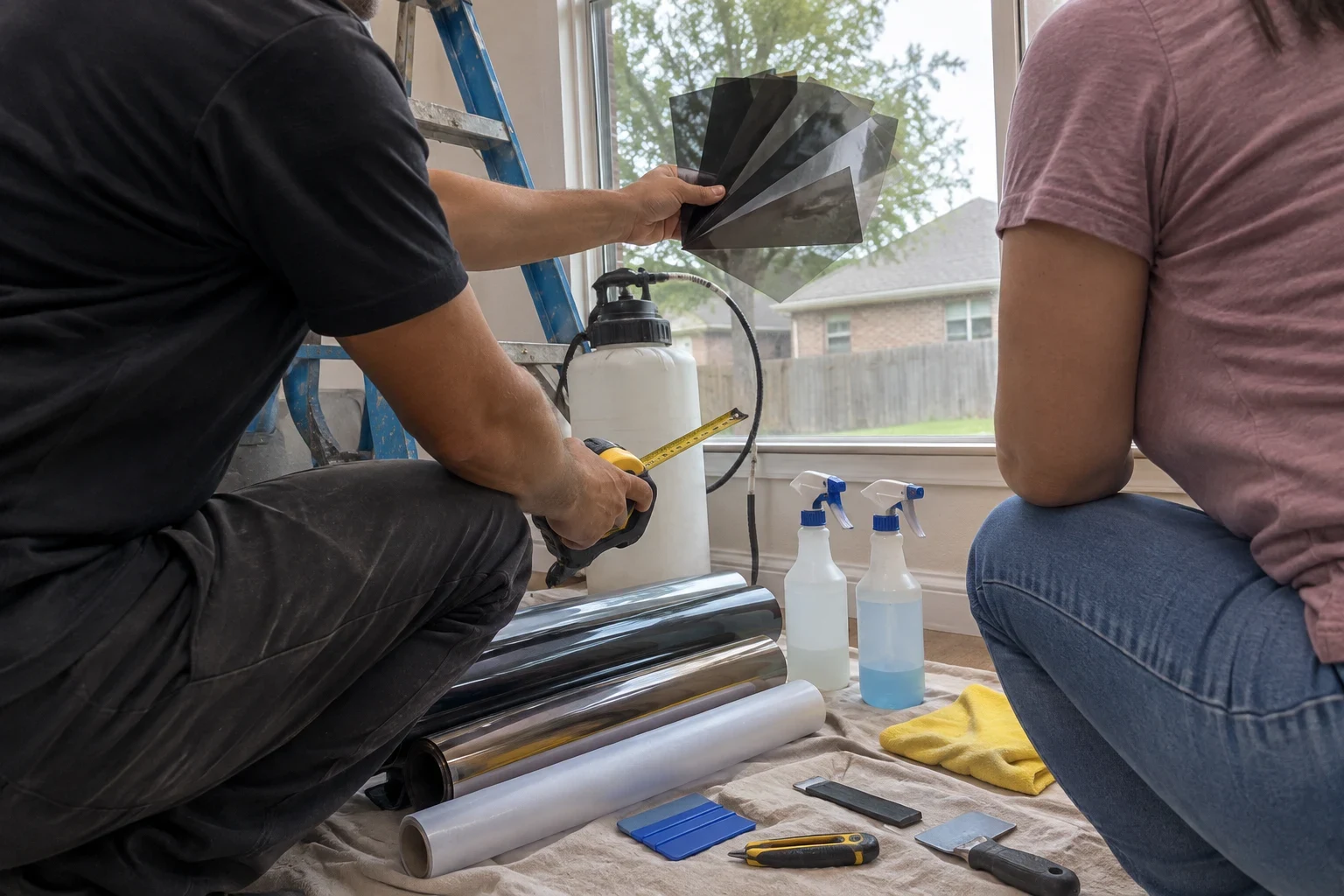
We bring film samples so you can feel the thickness and hold clear and tinted options up to your own windows. If budget is tight, we'll help you rank the openings so the most exposed ones get done first.
- 3
Install day
We work from inside, one room at a time, so you can stay home and go about your day. Most homes are finished in a single visit, and larger commercial jobs can be scheduled around business hours.
- 4
Curing and care
While the water trapped underneath dries out, the film may look slightly cloudy or show tiny moisture bubbles, and humid weather stretches that out. Give it about a week before touching it, then clean it with mild soap and a soft cloth.
Security film questions we hear
Will security film stop someone from breaking in?
No film makes a window impossible to get through, and we'd rather be straight with you about that. What it does is turn a quick smash into slow, loud work, and that delay often makes someone give up and leave. Combined with solid locks and good lighting, it's a strong layer.
Can you see the film once it's on?
Clear security film is hard to spot from across the room. Up close you may notice the thin edge near the frame. If you'd like some privacy or glare reduction too, tinted versions are available.
Does it work on dual-pane windows?
Yes, in most cases. We check each window first, because some film and glass combinations absorb more heat than others. We pick a film that's safe for that glass.
Can I start with just a few windows?
Of course. Many people film the doors and hidden ground-floor windows first, then add the rest later. We'll note what's left in your quote so planning the next round is easy.
Have you done much of this work?
We've tinted 24,918+ home windows, and security film is part of that work. We'll show you samples and explain what each one can and can't do before anything goes on your glass.
Add a layer of protection on your schedule
Talk with us about the doors and windows that concern you, and we'll come take a look. You'll get a clear, written quote and an honest answer about where film helps most.